

Me and my partner make our first visit to Japan, taking in Tokyo, the coast and rural life. September 2026.
I would have happily spent 100% of our time in Tokyo but Paula is adamant that (i) we don’t spend all of our trip in cities and (ii) we get off the main tourist trail. After a bit of research back in the UK we arrange a 10-day tour that spanned:
- Four nights in Tokyo.
- Four nights in the coastal/lakeside town of Matsue in Shimane Prefecture.
- Two nights in the rural community of Asuka in Nara Prefecture.
We had a ball, and I was so glad that Paula insisted on mixing it up.
Some of our favourite experiences and recommendations are set out below. At the end of the article, I also reflect a little on Japanese culture and some practicalities of the trip.
Shimokitazawa
This is a brilliant Tokyo neighbourhood in which to stay. Laid back and relatively low-rise, but with lots of cool people and lots to see and do. It is regularly cited as one of Tokyo’s main bohemian districts.
By day soak up the circa 100+ vintage clothes stores, vinyl shops and numerous decent coffee outlets. Our favourite spot for coffee, and people watching, was Sidewalk Coffee that occupies part of the ground floor in the Mustard Hotel.
By night you can easily find good beers (the tiny Tap & Growler was my fave), decent food options and a number of quality listening bars. More on listening bars later.
Tokyo Mass Transit
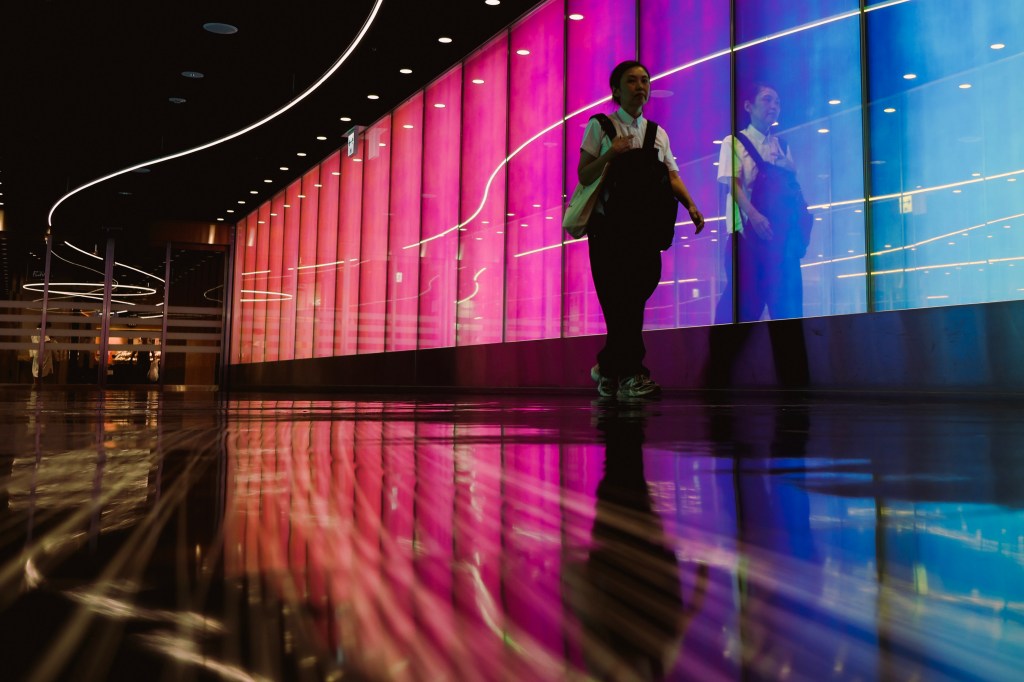
It can be bewildering to start with, but after 24 hours you begin to marvel are the scale and functionality of the Tokyo metropolitan train system. It is like nothing else in the world, and you need to give it a go.
Trains run by Tokyo Metro, Toei Subway, Japan Railways and multiple private railway companies all criss-cross the city and you never feel more than 200 metres from a station. Everything is punctual, and super interconnected. The lines are color-coded and every station numbered, making navigation relatively simple even for non-Japanese speakers.
Unusual features were the different grades of air conditioning on carriages (you actually get to choose between Weak, Standard or Mild), women only carriages and just the sheer volume of people.
Listening Bars
I had read a fair bit about the Tokyo listening bar scene before we left. Not least via flicking through my mate’s copy of the excellent Tokyo Jazz Joints book.
These little places provide sanctuaries of calm amid the chaos. They are places with a quiet atmosphere, where you appreciate the heavily curated music and without the need for extensive conversation. They seem to be largely run by owner-managers who are heavily into showcasing their vinyl. Most feel quite homespun, very atmospheric and probably don’t make much money.
The scene originated in the 1950s under the name Jazz Kissa Cafes and there are currently estimated to be circa 100 listening bars across Tokyo, most with a jazz flavour. We went to a tiny, but quite famous, place in Shimokitazawa called Jazz Haus Posy that has been going in its current form since 1973.
Not all have a jazz orientation. Our favourite listening bar experience was in fact a place dedicated to soul music – Little Soul Cafe.
Galleries & Gardens
I join these two together because we went to two excellent galleries that were both surrounded by wonderful Japanese gardens.
The first was the Teien Art Museum in Tokyo – housed in a 1930s Art Deco building and set within a walled garden estate. The traditional Japanese gardens here are super relaxing and are included in the price of a museum ticket.
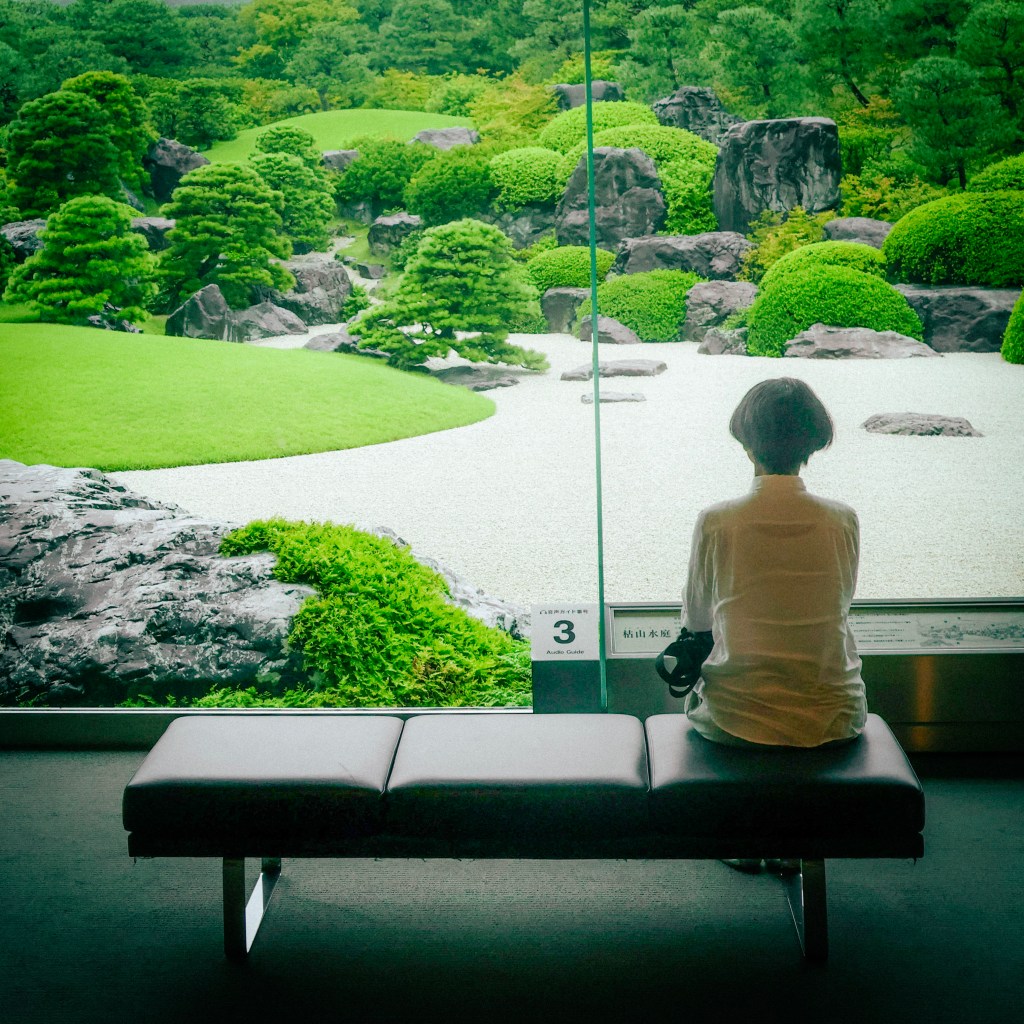
The second was the Adachi Museum of Art just outside of Matsue. The Museum’s gardens are regularly ranked in the top five gardens throughout Japan and took 15 years to create. A significant team of gardeners ensures not a single leaf or branch is out of place.
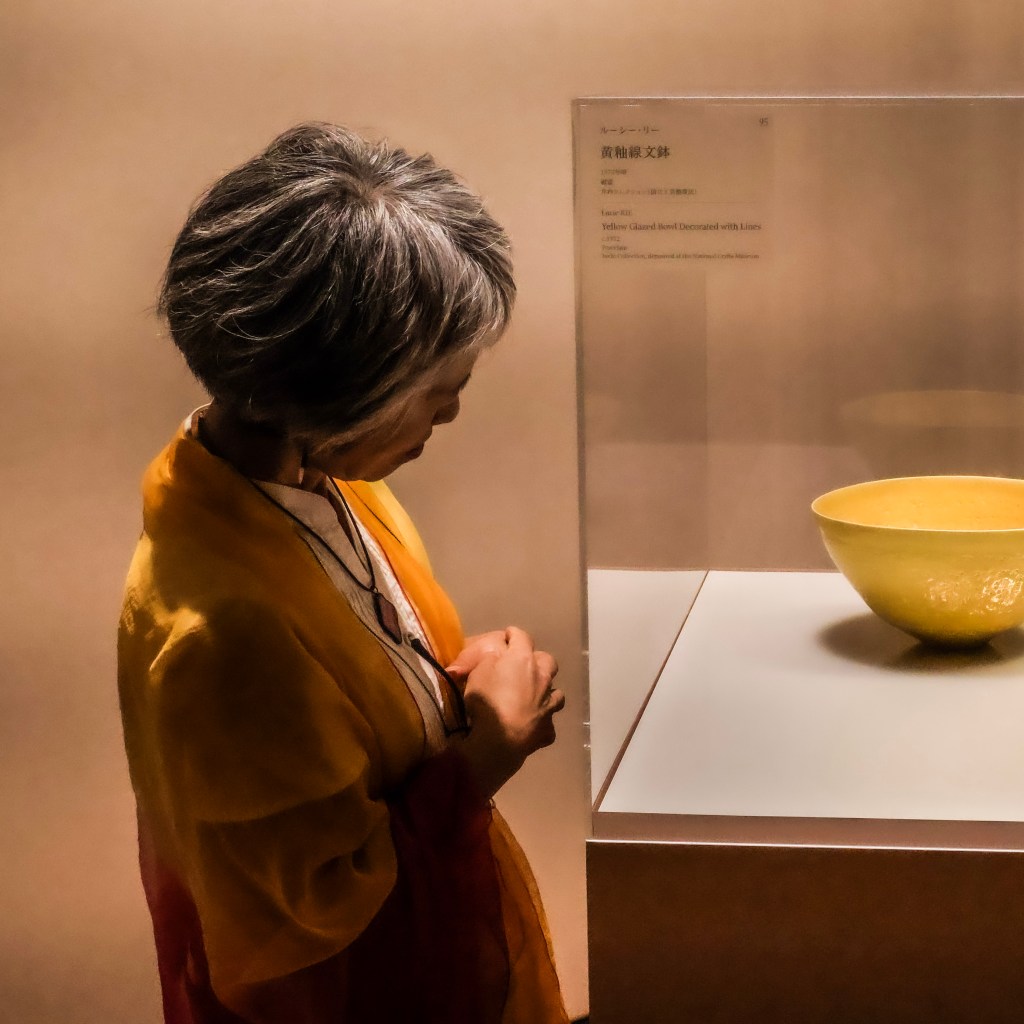
We barely scratched the surface of both Japan’s museum and gallery offer and the substantial array of Japanese gardens. That said, we saw enough to realise that both are essential ingredients in any trip here.
Communal Bathing
No trip to Japan is complete without getting your kit off for an onsen experience.
Onsens are public bathhouses built around naturally heated geothermal spring water. We took the 30-minute train ride from Matsue to the resort town of Kaike Onsen, which claims to be one of the main hubs of onsen-action in the country.
Our destination was the Ocean Day Use Onsen. Men were on the top floor with sea views and women on ground floor with a central atrium. They rotate the set up every week.
The drill was as follows:
- Get fully naked, although us men got a small modesty towel to dangle in front of our privates.
- Full power shower on entry. One of the main rules of an onsen is that everyone gets properly scrubbed on entry.
- Relax in the many hot pools of varying temperatures and cool off in the cold pools if necessary.
- Jump into the pyjamas supplied at reception and head to the post-onsen relaxation area.
We both loved it and felt extremely chilled after roughly two hours of taking it easy. The place was super busy. The onsen is evidently a key part of daily Japanese life.
Emi
Emi is the name of the property owner at our Matsue accommodation, which was a traditional Japanese house sympathetically split in two. Emi lives on one side, with the other side available for visitors. A small sliding door separates the two halves.
She was without doubt the most thoughtful and helpful host on the planet. Every morning she would appear through the door with fresh fruit, bread and jam and a range of gluten free snacks for Paula. Hand-written notes with recommendations appeared through the day and she was always on hand to assist.
The property itself was stunning and gave us a proper taste of traditional Japanese interiors – decked throughout with tatami mats, shoji screens, futons and low chabudai tables for dining.
Matsue is a charming town well worth a visit for a few days. It sits between Lake Shinji and Nakaumi on the banks of the Ohashi River connecting the two lakes. The city boundaries also extend to the Sea of Japan coast. Water is everywhere, and if you are ever in Matsue be sure to stay with Emi at Yonemuraya.
Japanese Interiors
Talk of Emi and her house brings me to one of the other big delights of our trip – the beautiful and simplistic layout of a traditional Japanese house. Minimalism is central, focusing on simplicity, uncluttered spaces, and intentional use of empty space. And all with extensive use of natural materials.
We picked Emi’s house because of its traditional style and we did the same in Asuka. Our Asuka accommodation – Branchera Villa – consisted of a 150-year-old Japanese folk house converted into two villas each set around a courtyard garden. I loved the place, especially the giant bath. It was like having a mini-onsen all to ourselves.
Be sure to stay somewhere with a traditional Japanese interior on any trip to Japan – they can be incredibly calming.
Shrines & Temples
One of our main reasons for visiting the rural settlements around Asuka was that the area is widely touted as the cradle of Japanese civilization. Roughly 1500 years ago, this was where the foundations of the Japanese state were laid, as political institutions were formed and Buddhism was introduced. The area is a UNESCO World Heritage Site.
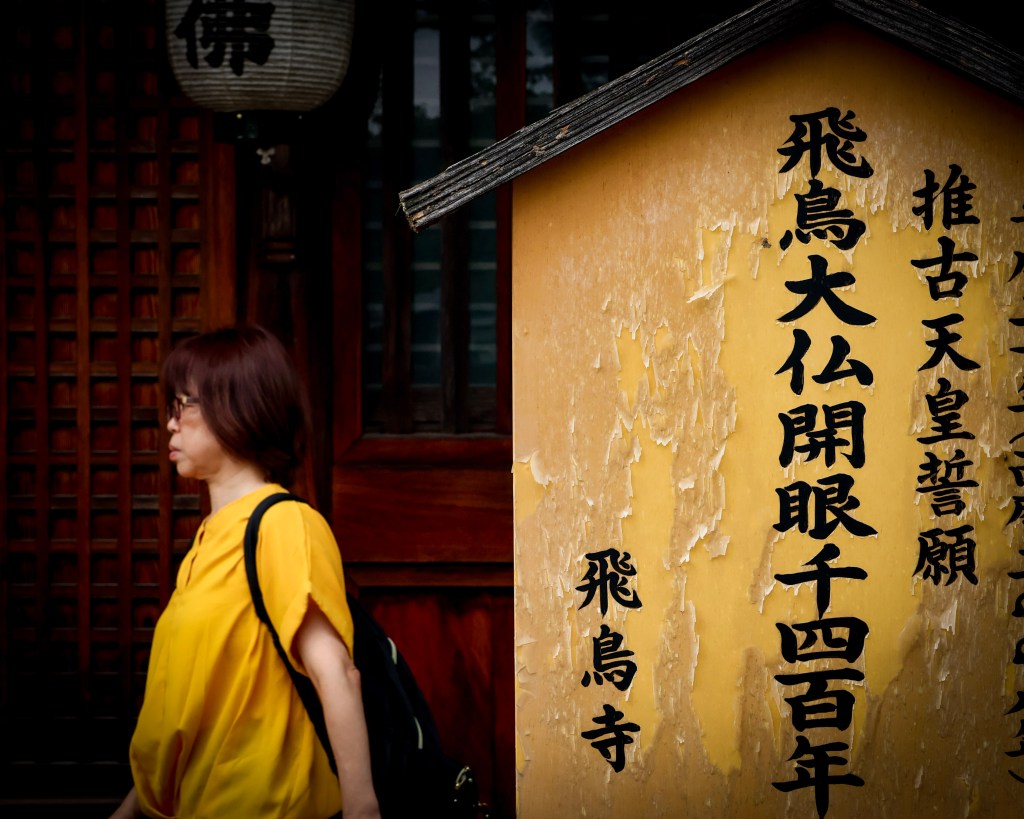
The Asuka-Dera Temple is a must see. It was apparently Japan’s first full-scale temple and contains the oldest known Japanese statue of Buddha.
Elsewhere the are numerous other active temples and the remains of ancient shrines. All of this is set in rolling rice fields and the area is a great place to wander, or cycle, for a few hours with very few cars around. Drop in at the excellent Cafe Clover for coffee/tea – we went three times in a little over 24 hours.
Bullet Trains
You can’t go to Japan without going on a bullet train, or as they are called locally the Shinkansen. We took two trips, one between Tokyo and Okayama on our way to Matsue and then the same line on the way back.
My headlines are as follows:
- You can go a hell of a long way very quickly, and with unbelievable punctuality.
- The train exteriors are seriously sleek with fantastic colours. The individual Shinkansen colours actually contain deep meanings tailored to the route, role, and local culture.
- The interiors are equally impressive. Seating was super generous, there was very little noise disturbance and the bathrooms were top-end.
The whole Shinkansen experience reinforced just how s**t British trains are in comparison, especially much of the dross we are served in Northern England.
One word of advice, stock up on food and drink at the station. There are no on-board catering facilities and travelling with a trusty Bento Box seemed the norm.
Japanese Culture
I’m a pretty orderly person so very much liked the Japanese system of extensive rules and regulations. I particularly loved the platform markings/queues to board the trains (though no need to replicate in UK pubs) and the little baskets besides most cafe/restaurant tables where we were required to store our bags and belongings, presumably for health and safety reasons. Paula is not like me and said the various rules just made her want to rebel!
The politeness blew us both away. There appeared to be no bad apples. Literally everyone we met was unbelievably friendly, going out of their way to help us and make us feel comfortable, no matter what they were doing. Japan consistently tops global surveys on politeness.
Other traits we noticed were that Japanese men still love a black suit for work, a lot of women do their make-up on trains and that taxi drivers look exquisite in their white gloves.
Also noteworthy is the love the Japanese have with heated toilet seats.
Practicalities
We flew from Manchester to Tokyo on an Hainan flight via Beijing, and flew back from Osaka with Etihad via Abu Dhabi . Both were positive experiences and decent value for money.
Getting around Japan on trains involved two purchases:
- First, a 1-week Japan Rail (JR) Pass that we purchased in advance of our trip. This cost about £250 each and allowed for unlimited travel on all Shinkansen trains and all other JR lines. We worked out that this was the cheapest approach if you are planning to take at least two long Shinkansen trips. Note that even though you purchase the pass in advance you still need to activate it in person at a JR station office, and that reservations are wise on most Shinkansen services (again done at a JR station office).
- Second, a Suica card purchased at Tokyo airport and loaded up with credit. We purchased this as it was the easiest way to use all the Tokyo suburban rail/metro systems on one card but subsequently found out we could use it pretty much all over Japan on non-JR services.
The combination of these two covered all our needs, save for a couple of taxi rides.
When we visited in mid-September, the weather was very humid and very wet. This is typical of the summer-early autumn period with the East Asian monsoon season. The wet weather didn’t detract at all, but if you do want less rain go in February/March.
In summary, we were both massively impressed with Japan. It is a wonderful country, and we’d both love to go back someday and perhaps stay a little longer than just 10 days next time.


Leave a Reply