

A few reflections on Atlanta, in the US Southeast, at the end of my first year of living in the city. October 2026.
After decades of working and writing on US cities and of regular transatlantic flights, the personal and professional stars aligned in early 2025. I was offered the opportunity to direct the Urban Studies Institute at Georgia State University (GSU) in downtown Atlanta. The city is not too far west, is a hub for Delta Air Lines, and is the destination for daily flights to and from the UK. It was thus a city in which it was possible to live and work while also maintaining my relations with family and friends in the UK.
Anyone who has ever moved internationally will know it is demanding – emotionally, financially and organizationally. It took months. My soon to be employer – GSU – were great. They led on filing my H-1B Visa paperwork, which culminated in my interview at the US Embassy in London in early September 2025. Even the Trump administration announcing the introduction of a $100,000 charge for those entering the country on my type of visa just before I was due to depart did not stop me entering the US on Monday 29 September!
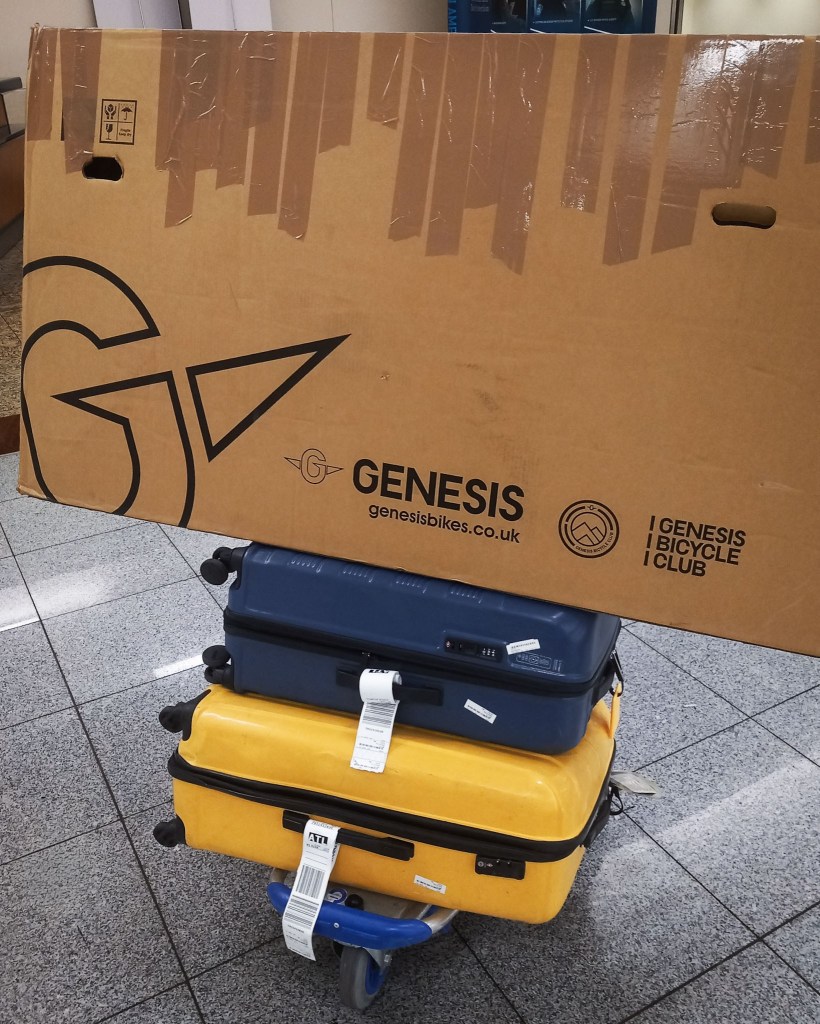
I arrived with just two suitcases and my boxed Cervélo R3. It would be another few months before my furniture and records made it to midtown Atlanta.
Some Basics
Atlanta has a population of just over half a million. Its modern-day origins go back almost two hundred years when it emerged as the rail hub for the US South and Midwest. Its population grew as did those of many US cities over the course of the nineteenth and early twentieth century. The city became home to the elite Black universities of Morehouse and Spellman and a thriving Black community, most noticeably in and around “Sweet” Auburn Avenue. This is despite the Jim Crow Laws and the widespread racism of much of the twentieth century.
From the 1950s onwards the inner city was decimated by the building of new roads that carved up communities and encouraged “White Flight”. Established neighbourhoods witnessed widespread disinvestment, as businesses and government switched their attention to the needs of the newly emerging suburbs. The physical and social consequences of these decades continue today, despite the redevelopment of Midtown and South Downtown.
This recent history of Atlanta means the automobile and its planning dominate the city and car traffic is heavy in and around most areas. It is something about which locals talk and are vocal. Nevertheless, as those visiting Atlanta for this summer’s Men’s Football World Cup, discovered, the city is home to a reasonable public transit system.
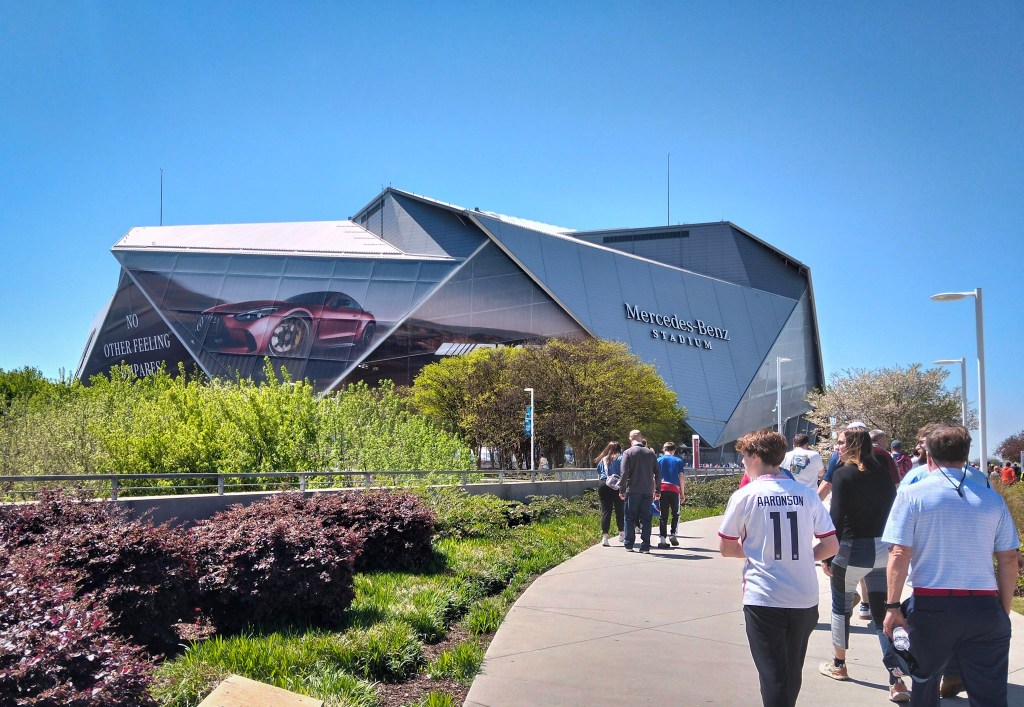
The Mercedes Benz Stadium, home to the city’s Major League Soccer (MLS) franchise, Atlanta United, is downtown and easily accessible by the Metropolitan Atlanta Rapid Transit Authority (MARTA), which oversees a relatively extensive bus and subway system. The latter consists of 38 stations, running north to south and east to west, including in the domestic terminal at the airport. The subway system covers three counties, those of Clayton, DeKalb and Fulton. This geography is the outcome of various referenda. Other neighboring counties voted against being included in the public subway system, although they are now seeking ways of connecting to it.
Downtown Decatur
Outside of Atlanta city limits – just – but on the MARTA subway network, downtown Decatur is a quaint and welcoming mix of bars, shops and restaurants, with a refurbished public square that was completed just in time for this summer’s Men’s World Cup. Apparently once a little rough round the edges, Decatur is now home to a dizzying array of places in which to spend your time and money.
From Opo Coffee and its bright décor and splendid coffee, through to the Brick Store Pub with its cute and welcoming beer garden tucked around the back, it is possible to potter around for hours. My own favourite spot is the Inner Voice craft beer bar. There are further great beers and tasty pizza from Brainwave Pizza, which makes for chilled evenings. If vinyl records are your thing, then Decatur has you covered, and I would definitely recommend checking out Delirium Vinyl.
Little Five Points
Little Five Points has a reputation for being one of Atlanta’s coolest, hipster spots. About a hundred years ago it became one of Atlanta’s first commercial districts outside of its downtown, and it has a strong sense of self, with well-organized locals. You can read more here at Little 5 Points.
The neighborhood consists of a nice mix of bars, restaurants, record and vintage clothing shops. The latter are not cheap, but the quality is high. A favourite of mine is Rag-O-Rama. The area is home to two of the city’s best and well-known vinyl record shops, in Criminal Records and Wax n Facts. Both are great, with friendly and knowledgeable staff and a good mix of new and second-hand stock. You can also get a drink at the excellent Porter Beer Bar. It has the vibe of an older English pub, with a good selection of bar food and drinks. If you want to walk back to Piedmont Park (see below) you should try out Victory Sandwich en route for a beer and a bite to eat.
Piedmont Park
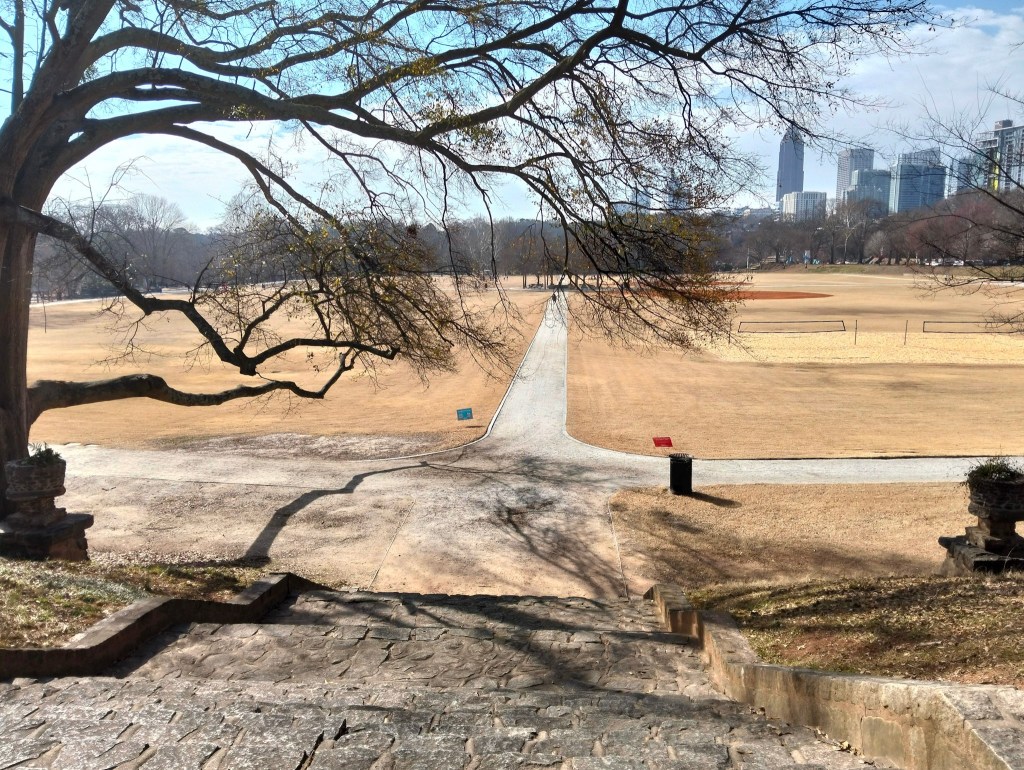
Located in midtown, Piedmont Park is a two-hundred-acre urban forest and park dating back to the late nineteenth century. It shares features with the more well-known Central Park in New York. Indeed, the redesign of the park in the early 20th century was called the Olmsted Plan and overseen by the sons of the Central Park architect, Frederik Law Olmstead. Hardly a week goes by without something going on, including every Saturday morning at the entrance on 12th Street which hosts the Atlanta Farmers Market.
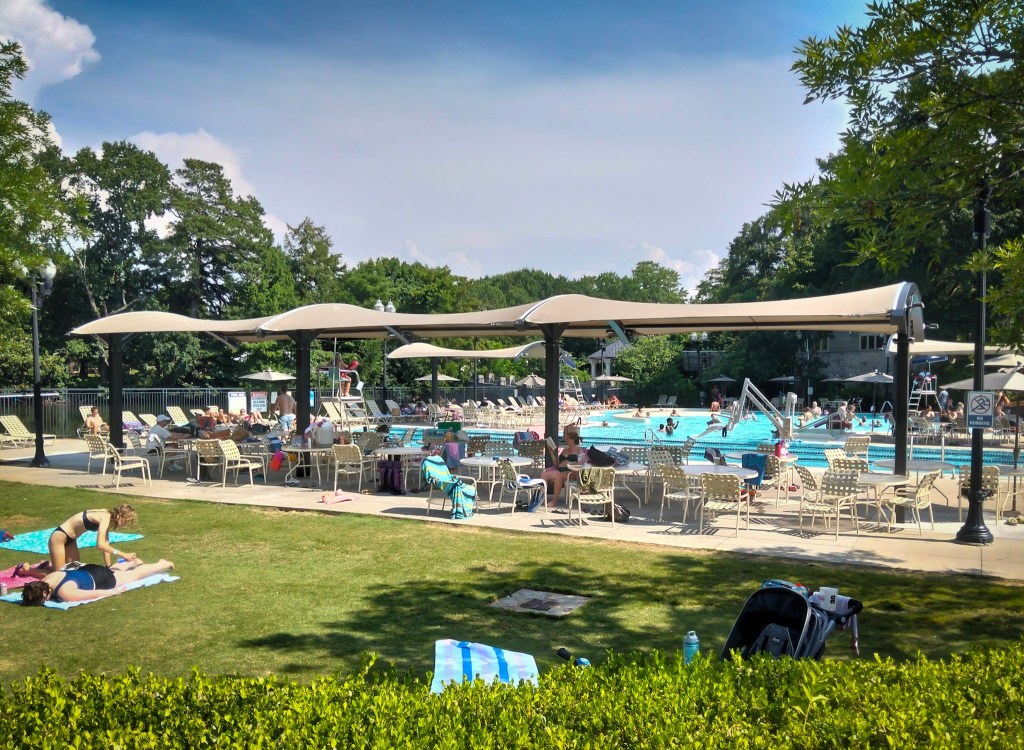
If you plan to visit it is worth checking out in advance what’s on – it can get very busy! This calendar will help. There is a public open air swimming pool at its centre, which opens from Memorial Day in early May through to Labor Day in early September. If you visit during this period, bring trunks and a towel so you can take a dip. This place helped a lot during the hot summer months!
Cycle/Rollerblade/Scoot/Walk the Beltline
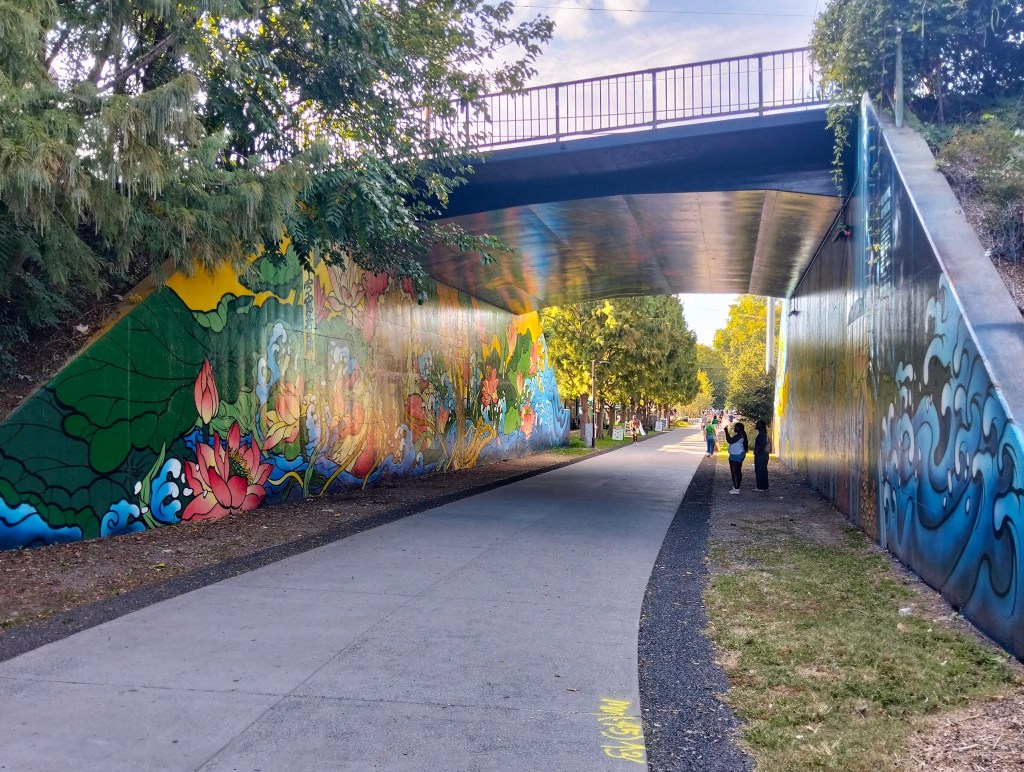
Atlanta’s Beltline is an example of the much wider trend in cities around the world of repurposing rail corridors, building apartments, bars, cafes, retail and restaurants along them. In the case of Atlanta, the redevelopment started in the early 2000s. Like other similar large-scale projects in the city, it has been a stop-start affair. However, it is now close to completion and when fully complete will form a 22-mile (35 km) trail that encircles the core of the city.
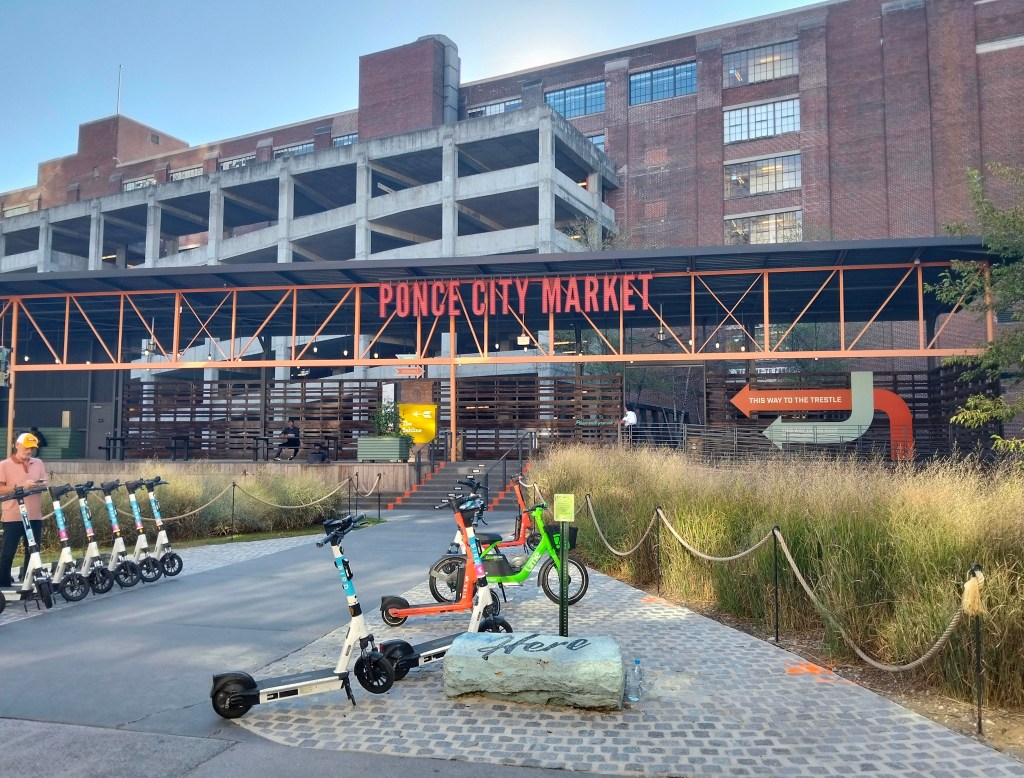
There is plenty to explore along the Beltline, and it is rarely ever quiet. At times it is less of a trail and more of a catwalk! Ponce City Market is a standout feature. A wonderful building dating back to the early twentieth century, it was listed on the US’s National Register of Historic Places a decade ago. When its initial retailers closed it was temporarily home to the city’s “City Hall East” before once again falling derelict. Hard to believe when you walk amongst its many bars, food hall and retailers. I am a fan of The Tap on Ponce.
More generally, the stretch running from Piedmont Park, heading south to Grant Park, is replete with bar after bar, restaurant after restaurant and plenty of relatively new residential developments. While the age profile of users of the Beltline is younger than me in my 50s, nevertheless, you will see folks of all ages and sizes doing their thing. Whenever you visit you will find cyclists, runners, skaters and walkers vying for space on the Beltline.
Overall
Atlanta is a great place to spend some time. There are multiple flights each day from London Heathrow and flights almost daily from Manchester. The Hartsfield–Jackson Atlanta International Airport also prides itself on being the busiest airport in the world. It is the Delta Air Lines Hub which means you can get to a lot of places from Atlanta, so maybe plan a visit to the city in between a longer break.
Be careful when you visit the city. Mid-June to late September can be unforgiving. Tourists refer to the city as “Hotlanta” for a reason. In general, the temperature is in the 90s, with humidity at over 50%. This combination means the real heat temperature feels over 100. If you have not experienced heat of that nature, it takes some time to get used to and can be demanding. On the other hand, the months either side of this peak summer period are wonderful, with long, sunny days.
You don’t need a car to get around the city, but it helps. If you don’t want to drive, then you could try out the driverless cars that are to be found all over downtown and midtown. They divide opinions but getting a Waymo is certainly an interesting experience! Finally, lean into the slightly slower pace demanded by the climate. Don’t rush and take things steady. Twelve months in and I think I have finally started to adjust!


Leave a Reply