
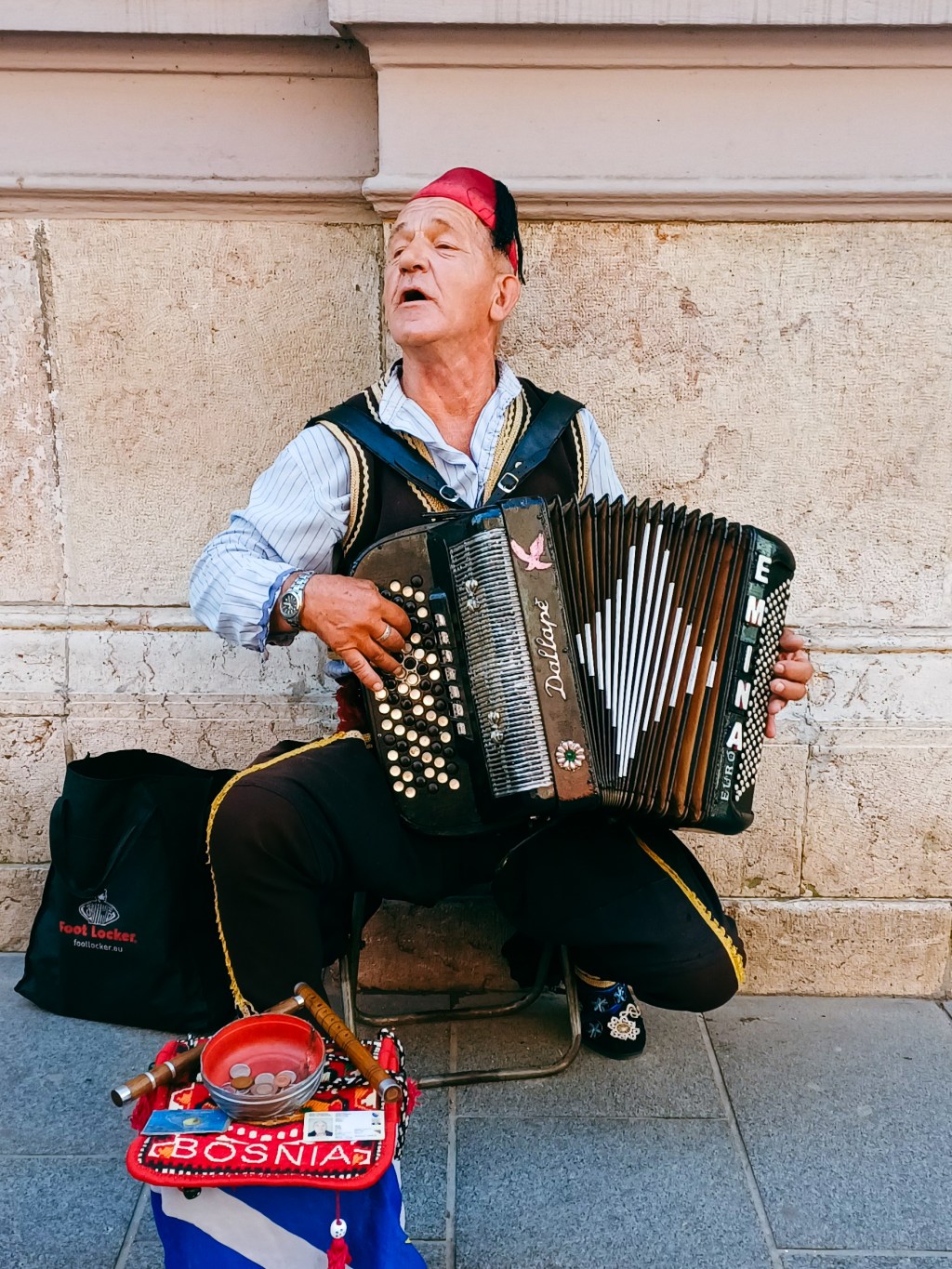
The Fell Bar Four (me plus three mates from Chorlton, Manchester) and two further mates from Birmingham and London head to the heart of the Balkans. May 2025.
Growing up I have two main memories of what is now Bosnia-Herzegovina, and they couldn’t be more different:
First, I remember the 1984 Sarajevo Winter Olympics. I was one of 24 million Brits who tuned in to see Torvill and Dean win skating gold in the Zetra Olympic Hall. I didn’t mind admitting to my mates back then that I found their Bolero routine totally mesmerising.
Second, I remember very clearly the TV footage of the Siege of Sarajevo in the early 90s and of course the Srebrenica massacre of 1995 which is the closest I have come in my lifetime to witnessing genocide – and even then I was in the comfort of my own home 1,500km away. The war in the former Yugoslavia was brutal.
These memories are the obvious starting point as we plan our schedule. The Fell Bar Four, and our two mates, are all sporting and history anoraks of varying degrees so having 1980s and 1990s Bosnia as a focus for our trip was always going to be a slam dunk.
It is worth saying up front that modern day Bosnia-Herzegovina is a fair bit more complicated than your average country and as a visitor you should probably be aware of how the country is segmented:
- The nation is divided into two entities of broadly the same size but each with a very different religious and ethnic make-up and with their own government agencies – who are supposed to operate within an agreed national legal framework but don’t.
- Sarajevo and Mostar are the main cities within the Federation of Bosnia and Herzegovina which is inhabited by 70% Islamic Bosniaks and 25% Catholic Croats.
- Banja Luka is the main city in Republika Srpska which has a resident base of circa 80% Eastern Orthodox Serbs.
I’m no expert on the relationship between, and indeed within, these two entities but there is evidently deep distrust, extreme political manoeuvring and a lot of painful history all mixed up with many thousands of successful inter-ethnic marriages. It is impossible to fully appreciate these complexities on the back of a quick visit but we at least try to grasp some basics.
Our flight into Sarajevo is via Frankfurt, arriving around lunchtime Friday. For those travelling through Frankfurt be aware that it is a huge airport – twice the footprint of Heathrow – so transfers can be a little stressful. We experienced some of this with a tight one-hour connection.
Our base for the four days is Hotel Cosmopolit in Sarajevo and I would highly recommend it. It is very central and a great spot from which to explore the city. Sarajevo is not massive (population of circa 350,000) and you can get to most of the central locations on foot. The attractive Miljacka river runs through the city and the place is surrounded by deeply forested hills.
We spend our first afternoon on a slow meander around Baščaršija aka Sarajevo Old Town. This place is a labyrinth of low-rise buildings, hidden alleys and courtyards, lots of mosques and lots of traditional tea and coffee shops. It is a bit like a Moroccan medina, but without the surrounding walls. A very nice place to wander but try to time your visit to avoid the tourist crowds.

There is evidently still huge pride from hosting the 1984 Winter Olympics even after 40 years. The mascot was a wolf named Vučko and his image remains everywhere around the city and there are numerous Olympic statues. Sarajevo ’84 distinguished itself in various ways – especially financially and in terms of participation levels – and the love for it seemingly still cuts across generations.
After our walk we couldn’t resist a couple of late afternoon beers in the Vučko Gastro Pub. This is probably the top craft beer bar in Sarajevo and is fortunately only 50 metres from our hotel. We end up coming here every day!

Dinner on Night 1 is in Restoran Pod Lipom in Baščaršija. I would recommend this place as a decent general restaurant to meet all tastes (plenty of fish and veggie options) and with fair prices. After dinner we find a little alley near our hotel that is home to three top bars all within 20 metres of each other and all with a vintage/retro vibe – go here for Balkan Express, Old School Cafe and Jazzbina. I can vouch for the honey rakija in both of the first two.
We get up Saturday morning and arrive for our 10.30 free walking tour run by Meet Bosnia. This is a great two-hour blast through Sarajevo’s history – starting with its Ottoman origins, then Austro-Hungarian rule, then Titoism and the struggles of the 1990s. We stop of course at the place where Archduke Franz Ferdinand was assassinated in 1914 and which was the trigger for WW1.

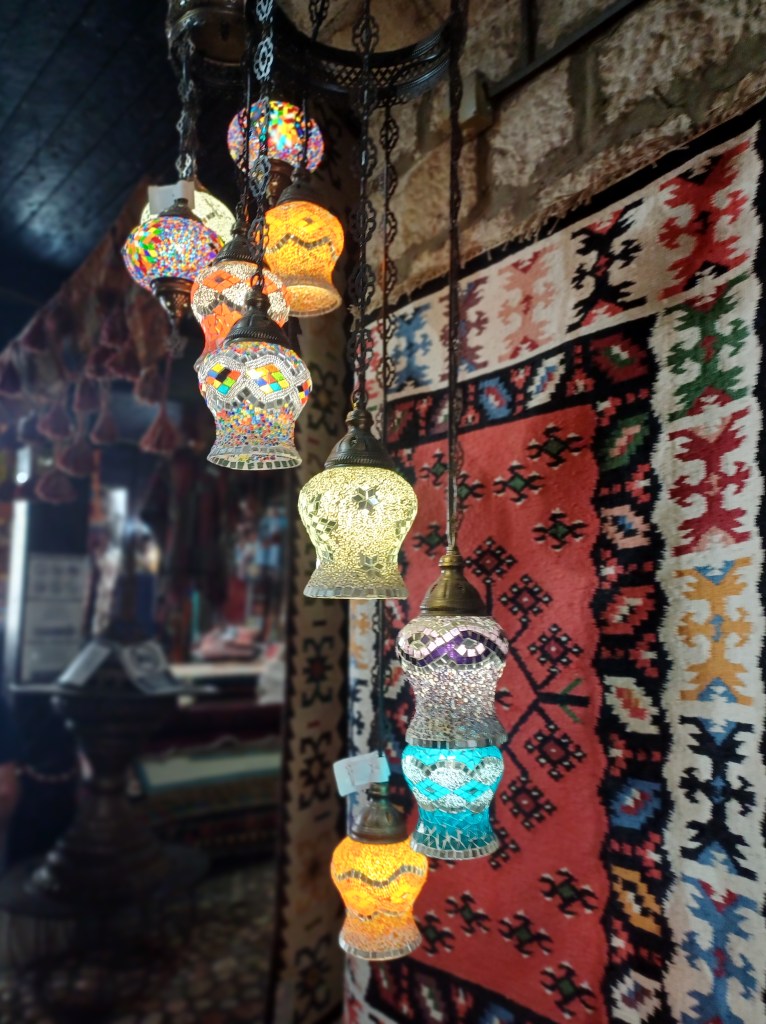
After the tour we stumble across a very decent fish restaurant – Konoba Luka – for a late lunch by the side of the river.
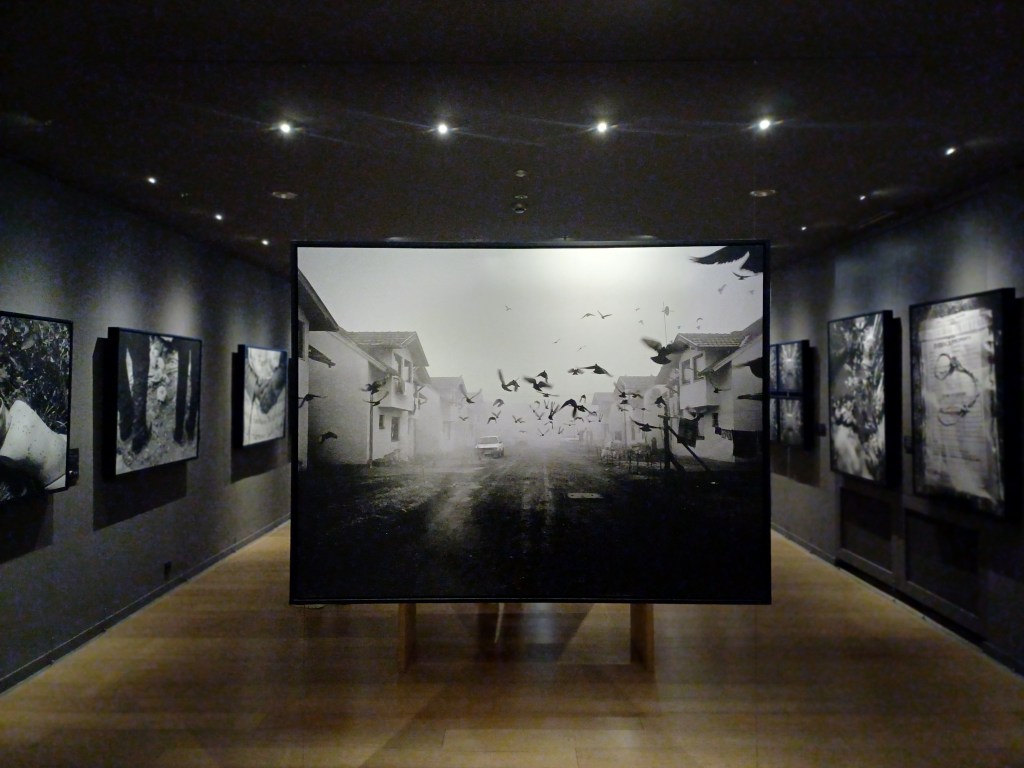
I had spotted the Galerija 11/07/95 photography gallery before we departed and we all went there on the Saturday afternoon. It is a permanent exhibition – a kind of hybrid museum-gallery – of Srebrenica through the genocide and is very moving. Entry worked out at about £7 each and it was well worth it.
In the early evening we walked out west to the station area and in particular to the Avaz Twist Tower (the tallest building in Bosnia at 175 metres). There is a bar on the 35th floor and an observation deck on the 36th. We made good use of both and got amazing views of the city at sunset.
We devoted the whole of Sunday to Mostar and it was an early start. Our train departed at 7.15 and is one of only two departures a day to Mostar. Here are a few tips on the journey:
- Get to the station early to either buy or pick up your ticket as the queues are massive. Either that or do as we did and buy tickets on the train, but beware this is cash only.
- Sit on the left-hand side of the outbound train, as you get the best of the amazing scenery from this side.
- Admire the communist era station buildings at both ends.
As with many train journeys in Europe, the Man in Seat 61 has an excellent review of this service.
Mostar has a Croat-majority west bank with circa 50,000 residents and a Bosniak-majority old town and east bank also with 50,000 residents, with the river in the middle. It is the main Croat city in Bosnia. Had we been here a day earlier we could have gone to see the local derby – Velez Mostar (the Bosniaks team, largely) v Zrinjski (the Croats team). As my mate Dom likes to say, it would have been a “very tasty” encounter.
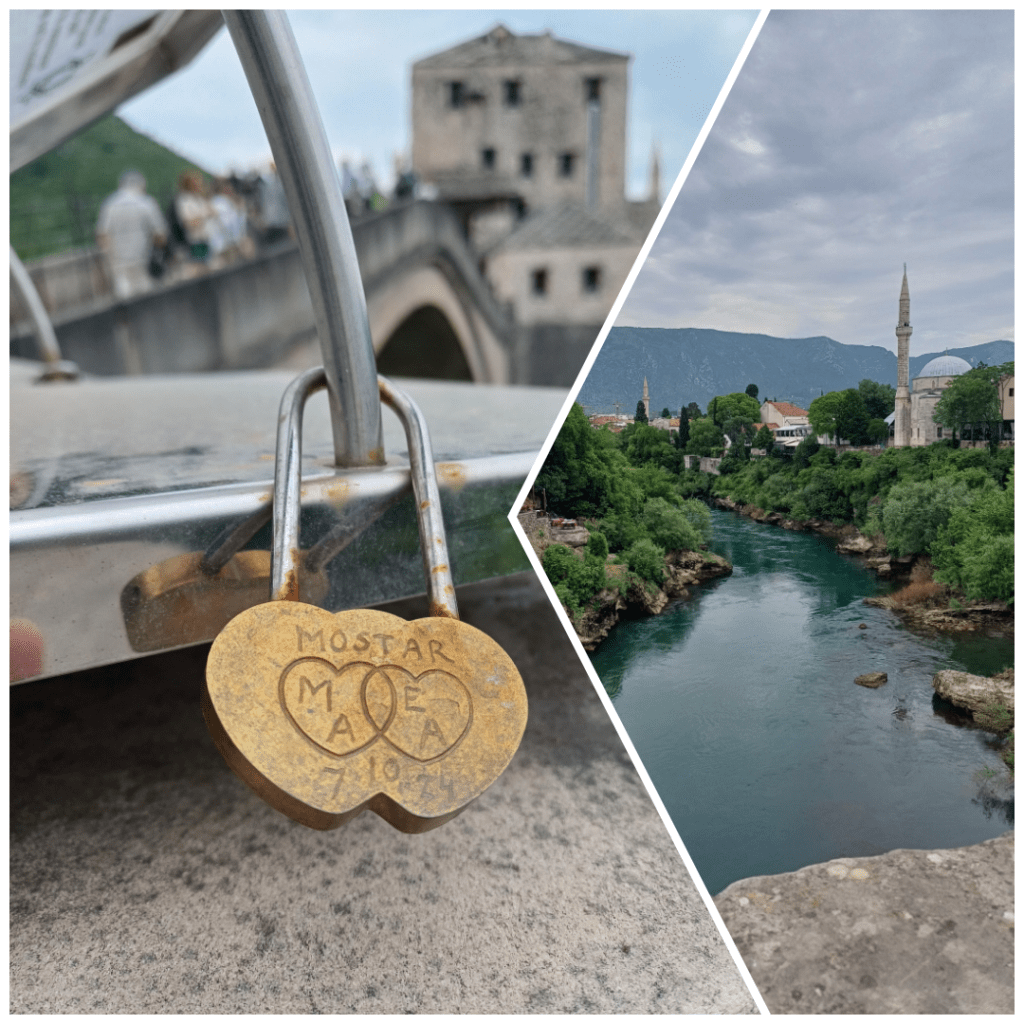
In Mostar we walk in from the station through the east side of the city and hit the old town first. It is fantastic to see the restored 16th-century Ottoman bridge – which was so visibly decimated on our TV screens in 1993 – and the River Neretva is spectacular but this area is rammed with tourists and pretty claustrophobic. We quickly escape to the west bank where it has a very different more airy feel.
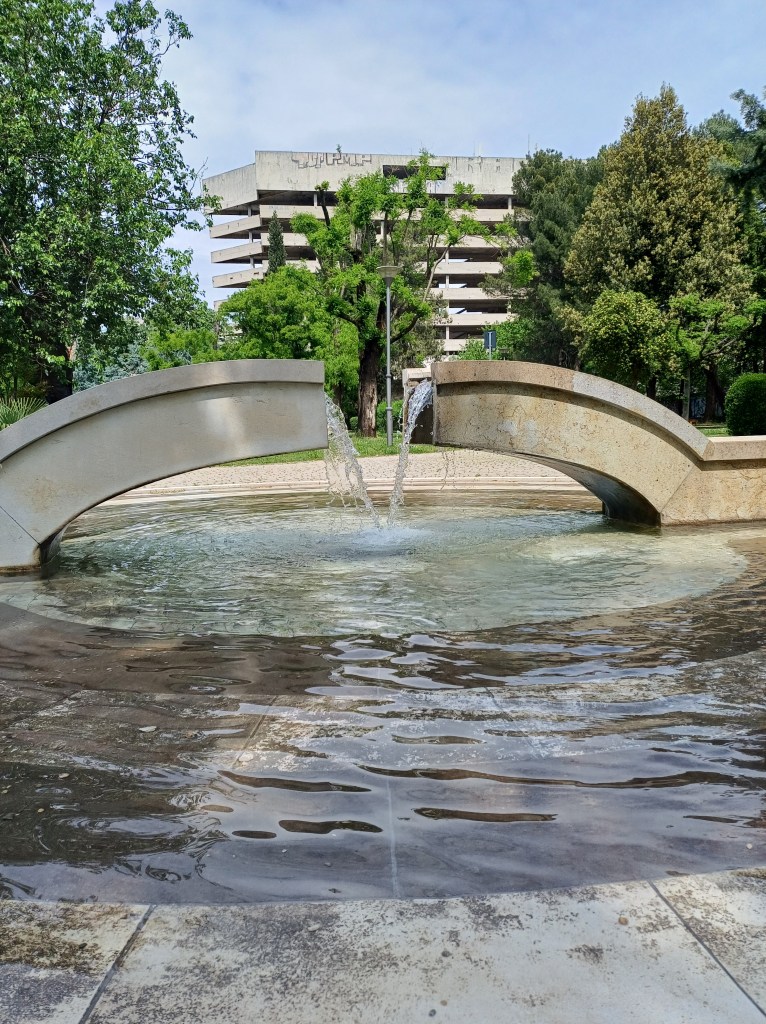
We had a good hour at the Partisan Memorial Cemetery, which is a park dedicated to those who died fighting as Yugoslav partisans in WW2. It is now semi-abandoned which added to its allure for me. You can read about it here.
We have our first Burek of the trip as a late lunch and then have a couple of drinks in the Mostar sun. Burek is a traditional Balkan dish – filo fingers filled with either meat, cheese or spinach or occasionally pumpkin. Look out for the sign Buregdžinica which are the eateries that specialise in Burek.
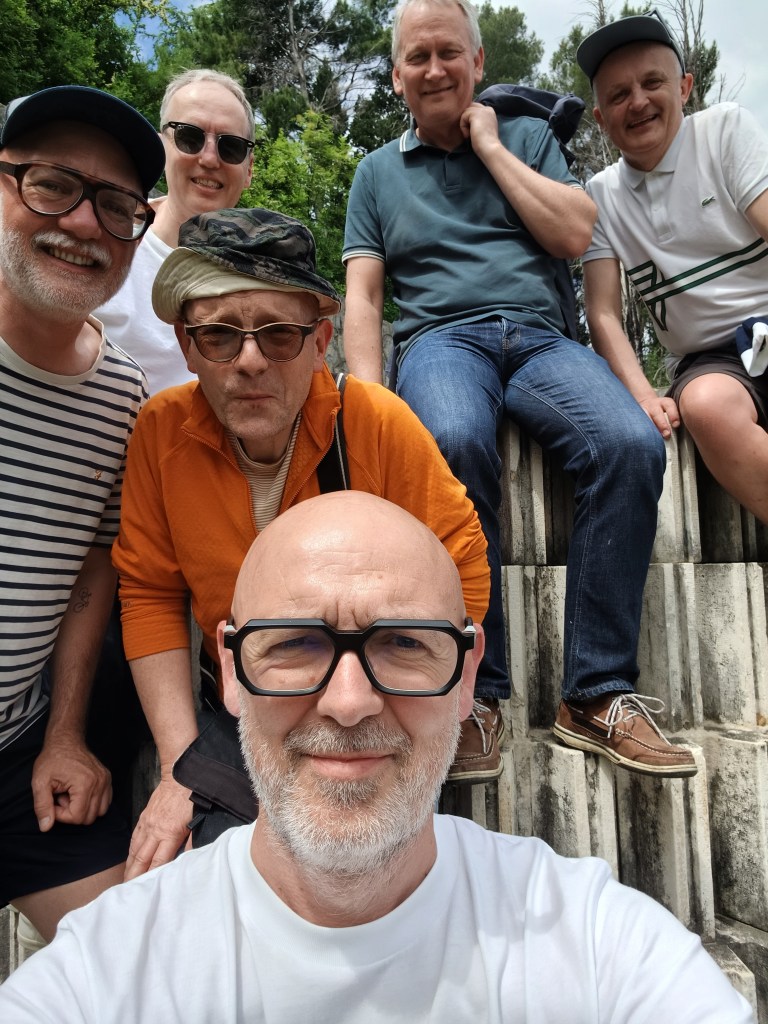

We are back in Sarajevo by 7.30pm and head straight to our Vučko Pub. The food here is distinctly average but the beers are exceptional. Turns out our favourites are the Vucko house brew on tap (a kind of red IPA) and the Sarajevsko Nefiltrirano which comes in bottles wrapped in a paper bag.

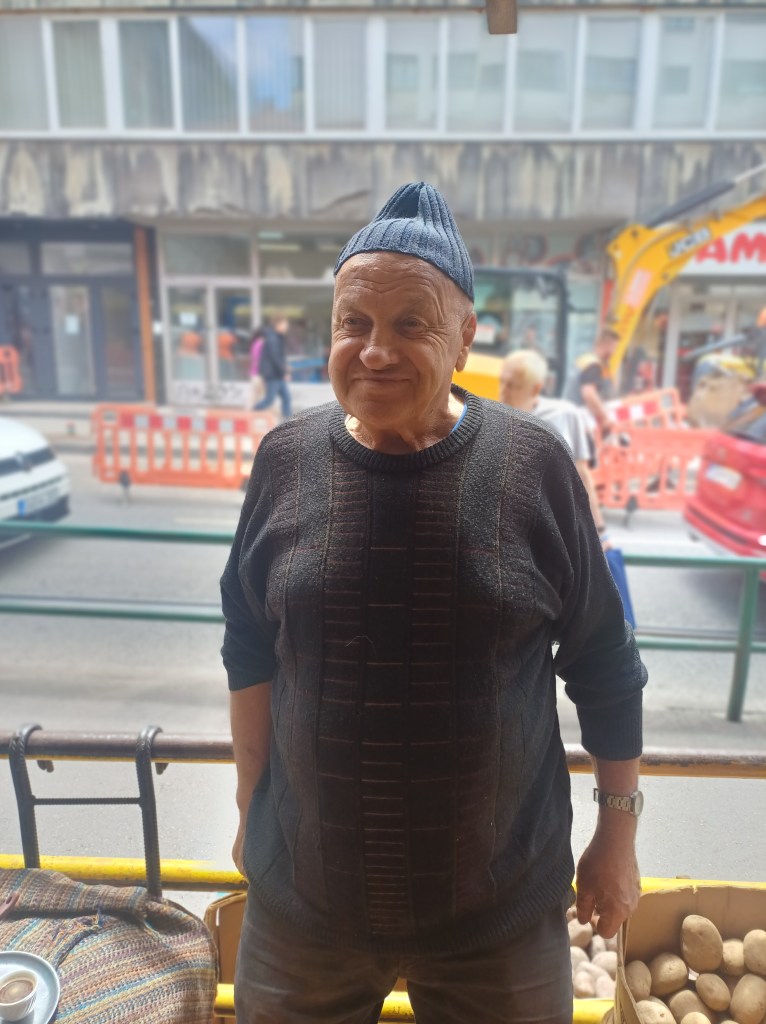
Monday morning we split up for a few hours and mooch. I went to the Olympic Museum but it was closed. I did however find a nice stylish café across the road called Kawa. I also stumbled accidently on the Markale fruit and veg market. This was the place that was subjected to two major bombardments in the 1990s with huge loss of life. I still remember very clearly seeing it on TV.
In the afternoon we regroup for a four-hour minibus tour around the outskirts of Sarajevo focussing on many of the features of the Siege of Sarajevo – again organised by Meet Bosnia. The most memorable stop for me was the Tunnel of Hope Museum which served as a remarkable supply line during the siege. The old Olympic Bobsleigh track up on the side of the Trebević mountain was also ace. The tour cost 30 euros, plus 10 euros for entry to the tunnel museum, and was good value. You can also visit the former Bobsleigh run via a cable car that departs from central Sarajevo near City Hall. Our guide Alan was very knowledgeable but pretty downbeat about life in Bosnia (see reflections below).
The focus of our last evening was on searching out Kino Bosna. This is a huge old 1920s cinema building now used a cultural and artistic space with a very bohemian feel. Monday is the main night, and when most of the impromptu gigs occur. It took some finding and was apparently much quieter than a typical Monday but we all loved it.
Tuesday is our day to travel back home. It was a relatively pain free journey with a slightly more relaxed layover in Frankfurt airport. This meant we could take advantage of the many airport facilities and I picked up a nice T-shirt from the Monocle shop. This is one of only nine Monocle outlets globally so I felt compelled to buy!
Post Trip Reflections:
I loved both Sarajevo and Mostar – both are very compact and perfect for city breaks. Everyone flocks to the respective old towns but there are plenty of other interesting things and I would encourage you to go off the beaten path. Both cities are very walkable.
We were all somewhat subdued after hearing Alan’s account of everyday life in Bosnia. He described the inefficient and deeply conflictual system of government, population loss and the lack of any significant manufacturing or professional service sectors. Despite us seeing a very buoyant visitor economy in both Sarajevo and Mostar, there are worrying fundamentals in the country as a whole that have created both fear and stagnation.
If you want to get reacquainted with smoking fags in bars then go to Bosnia. Pretty much every bar we went in was thick with smoke. It was another retro angle to our trip but created far more washing than I had hoped for when I got back.
Cash is king in Bosnia. A lot of places didn’t take cards at all but of these a fair number accepted cash in Euros as well as Bosnian Marks.
We had great fun and get on so well. This was the third trip we have done together as a group of six, and I feel very lucky to have such a fantastic group of like-minded mates to travel with. We are all looking forward to our 2026 trip.
PS. There are a couple of entertaining shows on Bosnia on BBC iPlayer – check out The Travel Show – Bosnia Bridging History and Hope and The Misadventures of Romesh Ranganathan – Bosnia and Herzegovina.
 LONG TIME DEAD
Leave a comment